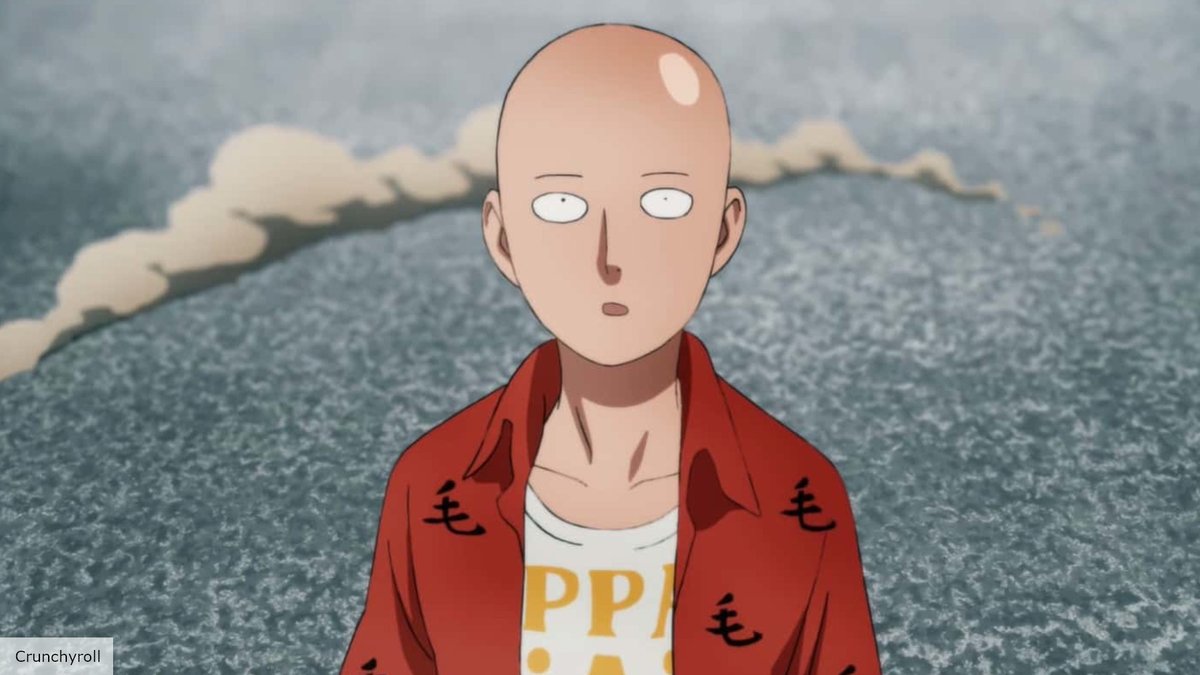
The world of anime is a vibrant tapestry woven with incredible heroes, terrifying villains, and power levels that stretch the imagination. Among the most popular figures currently captivating audiences are Saitama, the hero who defeats every foe with a single punch, and Tanjiro Kamado, the determined Demon Slayer on a quest to save his sister. It's a natural question to ask: if these two fan-favorite protagonists were to clash, who would emerge victorious?
While the excitement of imagining such a crossover is undeniable, a straightforward combat comparison reveals a colossal difference in their power scales. This flagship hub will guide you through a comprehensive analysis, leaving no stone unturned as we delve into the sheer scale of their power disparity and ultimately answer whether Saitama is stronger than Tanjiro Kamado.
Understanding Our Combatants: A Tale of Two Universes
Before we pit these heroes against each other, it's crucial to appreciate their individual strengths, journeys, and the unique contexts of their respective universes. One-Punch Man and Demon Slayer operate on fundamentally different power grids, which is the key to understanding any hypothetical battle.
Tanjiro Kamado: The Resilient Demon Slayer
Tanjiro Kamado's story is one of profound loss, unwavering determination, and relentless self-improvement. From a humble charcoal seller to a formidable Demon Slayer, his path has been fraught with unimaginable danger. He started with basic sword training and the Water Breathing style, steadily growing through sheer grit and the guidance of mentors like Giyu Tomioka and Sakonji Urokodaki. His journey is a testament to the human spirit, continuously pushing past his limits to protect his loved ones and humanity.
To truly grasp his combat effectiveness, it’s vital to understand . He isn't just a swordsman; he’s a strategic fighter, adapting to his opponents and harnessing both his innate abilities and learned techniques. His development has led him to master multiple breathing styles, including his ancestral Breath of the Sun, and awaken his Demon Slayer Mark, dramatically enhancing his physical capabilities.
However, Tanjiro operates within a world where even the most powerful human warriors, known as the Hashira, face life-threatening challenges. Figures like Kyojuro Rengoku, the Flame Hashira, sacrificed himself against Upper-Rank Three Akaza, an opponent Tanjiro couldn't hope to defeat alone. Similarly, other Hashira like Obanai Iguro, Giyu Tomioka, Sanemi Shinazugawa, and Muichiro Tokito demonstrate incredible strength, speed, and endurance, often pushing themselves to the brink against formidable demons. We often explore to contextualize Tanjiro's place in his world's hierarchy.
Tanjiro has faced an array of terrifying adversaries, from the likes of Rui and Hantengu (Upper-Rank Four, requiring a combined effort from Tanjiro, Genya, Nezuko, and Mitsuri to defeat) to the sheer overwhelming power of Akaza and Muzan Kibutsuji. Even elite demons like Doma, an Upper-Rank Two, require multiple Hashira to even stand a chance. Delving into illustrates the extreme challenges he overcomes. Despite his incredible growth, Tanjiro has clear limits, susceptible to injury and even death, as seen against powerful foes like Akaza and Kokushibo, brother of Yoriichi.
His eventual mastery of allows him to stand shoulder-to-shoulder with the strongest Demon Slayers, but it still has bounds. To understand the nuanced boundaries of his power, it's worth examining . Despite his tremendous strength, the question often arises: —and for many, the answer is often no, highlighting the collective effort required in his world.
Saitama: The Unbeatable Hero
Then there's Saitama, the "Caped Baldy," whose concept is almost a parody of the shonen genre itself. He's a hero not because of a grand destiny or inherited power, but because he trained so hard that he broke his "limiter." The result? He can defeat literally any opponent, regardless of their scale or threat level, with a single, often nonchalant, punch. This fundamental premise sets him apart from virtually any other character in fiction.
Saitama's powers are not just strong; they are presented as unlimited. He possesses immeasurable strength, capable of destroying meteors, splitting the sky, and leaping from the moon to Earth in 1.5 seconds. His speed far outstrips anything seen in the Demon Slayer universe, and his durability makes him practically indestructible. His very presence nullifies the concept of a fair fight. To grasp the full extent of his capabilities, explore .
His speed and resilience are just as absurdly high as his raw strength. While Tanjiro must dodge and strategize, Saitama simply exists without consequence. When you consider , it becomes clear that evasive maneuvers or defensive techniques from Tanjiro would be utterly meaningless. His casual jumps cover distances that would take Tanjiro days, and punches that level cityscapes barely register as effort. Even the most powerful attacks from cosmic-level threats leave him unfazed.
Saitama's combat style is elegantly simple: one punch. He doesn't rely on complex techniques or intricate breathing patterns. While he occasionally employs a "Serious Series" for particularly durable foes (like Boros), these are still just exaggerated forms of his basic movements. A closer look at reveals that even these are simply expressions of his limitless power, not specialized skills in the way Tanjiro's Breath Forms are.
The Inevitable Clash: Analyzing the Power Gap
When we bring these two characters together, the fight isn't about skill, strategy, or willpower – it's about an insurmountable power differential. Tanjiro's entire arsenal, from his Nichirin Blade and various Breath Forms to his agility and heightened senses, is designed to combat demons who, while incredibly powerful, still abide by certain physical laws. Saitama exists outside those laws.
The core of the matter lies in . Tanjiro's strongest attacks, like the Hinokami Kagura, might cut through steel or even the flesh of a demon, but they would be like a gentle breeze against Saitama. His resilience is such that he often chooses to take hits to feel something, not because he needs to. This vast disparity highlights . Saitama's world regularly features threats capable of planetary destruction, while Tanjiro's highest threats are city-block level at most.
Consider . Tanjiro spends entire arcs training, mastering techniques, and planning for specific demon weaknesses. He relies on tactical thinking, predicting movements, and exploiting vulnerabilities. Saitama, on the other hand, has no strategy beyond "punch it." His opponents are never fast enough, strong enough, or durable enough to warrant anything more. Tanjiro's intricate swordplay would be too slow to even register against Saitama's speed, and any blow landed would have zero effect.
The Verdict: A Clear Victor
In any hypothetical combat scenario, Saitama would defeat Tanjiro Kamado instantly and effortlessly. There is no aspect of Tanjiro's abilities—be it strength, speed, durability, or even the spiritual enhancement of his Demon Slayer Mark—that could challenge Saitama.
Saitama's existence fundamentally breaks the rules of conventional combat. His power level is a narrative device designed to be limitless, ensuring his victory against any foe. Tanjiro, while an incredibly strong and inspiring hero within his own universe, simply operates on an entirely different plane of existence. It wouldn't be a fight; it would be a demonstration of an insurmountable power gap, over before it even began.
Ultimately, comparing these two heroes is less about who would win and more about appreciating the distinct narrative purposes they serve. Tanjiro represents perseverance, growth, and the triumph of the human spirit against overwhelming odds. Saitama represents the existential challenge of absolute power and the search for meaning when victory is guaranteed. Both are fantastic characters, beloved for different reasons, but in a direct confrontation, there's only one outcome.